
Custom Office Furniture Manufacturer: What B2B Buyers Need to Know
Choosing a custom office furniture manufacturer is not simply a matter of finding a factory that can produce a desk in a different size or match a particular wood finish. For B2B buyers, the bigger question is whether the manufacturer can turn a project brief into furniture that fits the space, meets the required specifications, stays consistent across a full order, and arrives when it is needed.
This is particularly important for office furniture wholesalers, furniture brands, interior design companies, fit-out contractors, and corporate procurement teams. A project may involve executive desks, workstations, meeting tables, storage cabinets, and reception furniture, all of which need to work together in the same environment.
However, customization also introduces more decisions. Dimensions need to be confirmed, materials need to be agreed upon, drawings need to be reviewed, and samples need to represent what will actually be produced. If these details are left open, even a capable manufacturer can encounter avoidable delays and misunderstandings.
With these challenges in mind, this guide explains how to evaluate a custom office furniture manufacturer, what to confirm before placing an order, and how to manage the process from the first design discussion through production and delivery.
1. Define Your Custom Office Furniture Requirements First
Before contacting manufacturers, first establish what the project actually needs. A supplier can only provide a useful quotation when the product requirements, quantities, and commercial expectations are reasonably clear.
Although a reference image is a helpful starting point, it rarely contains enough information for production. For example, it may show the appearance of a desk without explaining its dimensions, internal structure, cable routing, storage capacity, or hardware requirements.
Start with the space and its intended use
For an office fit-out, start by reviewing the floor plan and the functions of each area. Consider how many people will use the space, what equipment they need, and how furniture will be arranged around doors, windows, walkways, and electrical outlets.
For example, a conference table designed for twelve people needs more than a suitable tabletop size. Buyers should also consider chair clearance, access to power and data connections, screen placement, and the route for bringing the finished table into the building.
Similarly, individual workstations may require monitor arms, cable trays, modesty panels, under-desk storage, and privacy screens. These details can influence both the design and the final quotation.
Separate essential requirements from preferences
At the same time, not every part of a product needs to be customized. An existing furniture range may already meet the project’s needs, with only a change in finish, dimensions, or storage configuration required.
A useful starting checklist includes:
- Dimensions:Desk sizes, cabinet heights, tabletop thicknesses, and available installation space.
- Function:Storage capacity, cable management, privacy, accessibility, and intended daily use.
- Appearance:Color, material, surface texture, metal finishes, and overall design style.
- Quantity:Total order volume and quantities for each product, size, and finish.
- Commercial requirements:Budget, delivery destination, target date, and packaging needs.
- Approval process:Who will review drawings, approve samples, and authorize production.
Taken together, this information helps the manufacturer identify potential problems early rather than discovering them after the quotation has been accepted.
Decide how much customization is necessary
In general, buyers can choose from three approaches to custom office furniture:
1.Configure an existing product: Select from available finishes, sizes, accessories, or modular combinations.
2.Modify an existing design: Adjust dimensions, storage arrangements, cable openings, or selected components.
3.Develop a new product: Create a new structure or design around specific project requirements.
Importantly, each approach has different implications for development work, tooling, material sourcing, and lead time.
For many commercial projects, modifying an established product offers a practical balance between design flexibility and production efficiency. By contrast, a completely new design makes more sense when existing products cannot meet an important functional or visual requirement.
Ultimately, the goal is not to customize everything. Instead, identify which changes will genuinely improve the finished workspace.
2. Evaluate the Manufacturer’s Design and Production Capabilities
Once the requirements are clear, the next step is to determine whether a manufacturer can deliver them.
Although a furniture catalogue may demonstrate a wide product range, it does not necessarily show how well a company handles custom development. A more useful evaluation looks at the relationship between design, technical preparation, manufacturing equipment, and production control.
Look beyond product images
To begin with, ask the manufacturer to explain how a project moves from an initial idea to a finished product. Can its team review floor plans? Can it develop a proposed layout, prepare technical drawings, recommend suitable materials, and identify construction issues before production begins?
These questions become particularly important when a project includes several furniture categories. An executive desk, a bank of storage cabinets, and a conference table may each look straightforward individually. However, they can create coordination problems if their dimensions, finishes, or functional details are developed separately.
As a result, a manufacturer with design and space-planning capabilities may help identify these issues before they reach the workshop.
Check the production processes relevant to your order
For this reason, evaluate manufacturing capability against the products being purchased, not just the size of the factory.
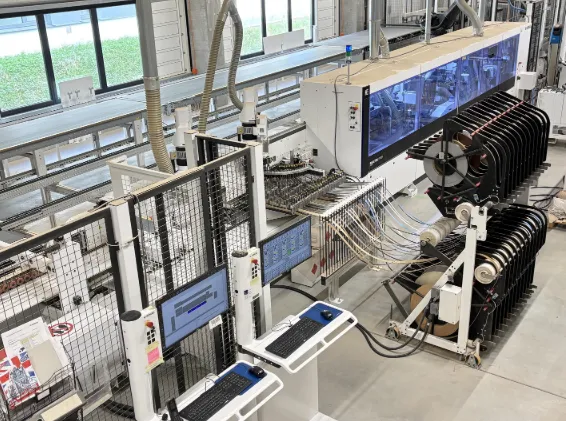
For panel-based office furniture, relevant processes may include panel cutting, edge banding, CNC drilling, hardware installation, surface finishing, and assembly. Meanwhile, metal components, upholstered products, and height-adjustable desks may require additional equipment or specialized production arrangements.
In addition, buyers should ask which processes are handled in-house and which involve outside suppliers. Outsourcing is not automatically a problem, but responsibilities, inspection arrangements, and control over specifications should be clear.
A useful supplier assessment covers the following areas:
| Area | What to check |
| Design and engineering | Ability to review requirements and prepare production-ready drawings |
| Manufacturing equipment | Machinery and processes relevant to the ordered products |
| Material sourcing | Availability of specified panels, finishes, hardware, and other components |
| Production planning | Ability to coordinate quantities, product variations, and delivery schedules |
| Quality management | Defined inspection points and documented approval requirements |
| Project experience | Examples of comparable products or projects, where available |
When assessing these areas, request evidence that relates to your order. A factory tour, equipment photographs, material samples, production records, or examples of similar products can provide more useful information than a general claim of having strong manufacturing capabilities.
Ask how the manufacturer handles difficult requirements
Equally important, a capable custom office furniture manufacturer should be willing to discuss limitations as well as possibilities.
Suppose a buyer requests a longer executive desk with a thicker-looking tabletop and an integrated storage cabinet. Increasing the tabletop length may affect its support structure. Similarly, changing the cabinet position may reduce legroom or alter the cable route, while a different surface material may require a revised edge treatment.
In other words, these are engineering and production questions, not merely design preferences.
Therefore, pay attention to how the supplier responds. Does it explain the implications of a proposed change and suggest alternatives, or does it accept every request without examining the details?
Clear technical communication at this stage can prevent costly revisions later.
3. Understand What Can Be Customized in Office Furniture
Next, consider that the scope of customization varies by product range and manufacturer. Before comparing quotations, identify the specific elements that need to change and confirm how each change affects construction, cost, and production.
Dimensions and structural details
Common changes include desk width and depth, cabinet height, storage layout, tabletop configuration, workstation arrangements, and the positioning of cable openings.
While some adjustments are relatively straightforward, others can affect stability, component compatibility, assembly, or packaging.
For example, changing the length of a conference table may require a review of the supporting frame and the position of its cable-management components. Likewise, a larger cabinet may need a different internal layout or additional structural support.
For this reason, ask the manufacturer to confirm which dimensions can be changed without redesigning the entire product.
Materials, finishes, and hardware
Meanwhile, material selection has a direct effect on appearance, maintenance, durability, and cost.
Depending on the product, buyers may be able to select from different panel materials, decorative surfaces, veneers, painted finishes, metal finishes, upholstery, and hardware options.
Even so, two materials that look similar in a catalogue may perform differently in everyday use. A surface suitable for a lightly used private office, for instance, may not be the best choice for a high-traffic shared workspace.
Hardware deserves the same attention. Hinges, drawer slides, locks, handles, and adjustable components affect the way furniture operates, not just how it looks.
Therefore, the quotation should identify the proposed materials and hardware clearly enough for the buyer to understand what is included.
Branding, modular design, and private-label requirements
Beyond the furniture itself, brands and wholesalers may have additional requirements, including branded labels, product identification, custom packaging, or specific combinations of finishes and components.
For OEM or private-label projects, clarify who is responsible for drawings, product specifications, branding files, packaging artwork, and any dedicated tooling. In addition, agree on how product codes will be recorded so future orders can be matched to the correct specifications.
For modular office systems, confirm which components can be combined and whether the same arrangement can be reproduced for future projects.
In the end, customization is most useful when it solves a defined business or design problem. If a standard product already meets the requirement, changing it unnecessarily may add development work without providing much practical benefit.
4. Turn Design Concepts into Approved Production Specifications
At this stage, remember that a design proposal communicates what the furniture should look like, while production specifications explain how it should be made.
This distinction is important when working with a custom office furniture manufacturer, particularly when multiple stakeholders are involved.
Understand the difference between layouts, renderings, and production drawings
A floor plan shows where furniture will be placed. A 3D rendering helps stakeholders assess appearance, proportions, and how products relate to the surrounding space. Production drawings, on the other hand, provide the dimensions and technical details needed for manufacturing.
Therefore, these documents serve different purposes and should not be treated as interchangeable.
Before production begins, confirm that the approved drawings cover the details relevant to each product, including:
- Overall dimensions and important component measurements.
- Material specifications and finish references.
- Structural details and connection methods.
- Hardware types and positions.
- Cable openings and other functional features.
- Assembly requirements and product orientation.
The exact information required depends on the product. For instance, a custom reception counter may need more detailed coordination than a standard storage cabinet.
Use 3D design to review the proposal, not replace technical approval
For instance, 3D visualization can help buyers understand how furniture will look within a proposed workspace. It is especially useful when comparing layouts, reviewing proportions, or coordinating furniture across several rooms.
However, a rendering may not show hidden construction, exact tolerances, or every hardware detail.
As a result, visual approval should be followed by approval of the relevant technical documents and material references.
Before releasing an order, confirm that the buyer and manufacturer are working from the same approved revision. This helps ensure that the design presented to stakeholders matches the product prepared for production.
Keep design changes under control
To see why this matters, consider a project in which the buyer requests an additional cable opening after the desk drawings have been approved. The change may seem minor, but it could affect the tabletop, cable tray, packaging, and production schedule.
A simple change-control process should record:
1.What needs to change and why.
2.Which products, drawings, and components are affected.
3.Whether the change affects cost, materials, or delivery timing.
4.Who must approve the revised specification.
5.Which drawing revision is valid for production.
This process is particularly important for large orders and repeat projects. Otherwise, an informal message or an outdated marked-up image could become an untracked instruction to the workshop.
5. Check Material Quality, Sample Approval, and Quality Control
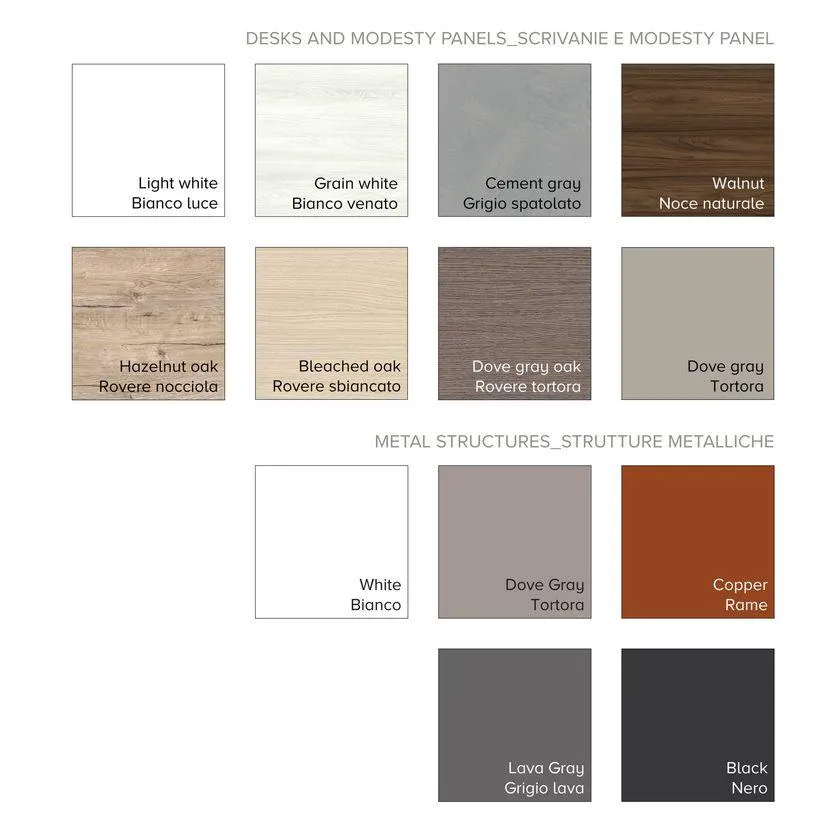
To begin with, material descriptions such as “premium board,” “wood finish,” or “high-quality hardware” are too broad to serve as purchasing specifications.
Instead, buyers need to know what materials are being proposed, how their appearance will be approved, and how the finished products will be checked against the agreed requirements.
Confirm the material specification
Depending on the furniture, the specification may need to identify the panel substrate, decorative surface, veneer, paint system, edge treatment, metal finish, upholstery, and hardware.
If the project has environmental or regulatory requirements, confirm which requirements apply to the destination market and product category. Request the relevant test reports, declarations, or certification documents where required. In particular, do not assume that a general statement about environmentally friendly materials proves compliance with a specific standard.
For projects containing several furniture types, prepare a material schedule that links each material and finish to the products where it will be used.
This is especially helpful when desks, cabinets, and meeting tables are expected to share a consistent appearance.
Approve finishes using identifiable references
In practice, a finish can look different under showroom lighting, natural daylight, and the lighting installed in the final office.
Catalogue photographs and screen images are useful for narrowing the options, but physical samples are generally more reliable for final color and texture decisions.
When reviewing samples, focus on the following details:
- Color and surface texture.
- Gloss level and the way the surface reflects light.
- Grain direction and visible pattern.
- Edge treatment and exposed components.
- Compatibility with other furniture and interior finishes.
Once a finish is approved, record its reference code and link it to the relevant product specification.
If the same color is used across different materials, confirm whether an exact visual match is expected or whether slight differences are acceptable. After all, the same color description does not guarantee an identical appearance across a painted metal frame and a decorative panel.
Make the approved sample a production reference
For customized office furniture, a sample or prototype can help resolve details that are difficult to judge from drawings alone.
The sample review should consider dimensions, construction, hardware operation, finish quality, assembly, and any product-specific functional requirements.
After approval, retain a record of the sample, drawing revision, material references, and any agreed deviations. Where practical, the buyer and manufacturer should each retain an identified reference or a documented approval record.
Just as importantly, distinguish between prototype approval and approval for mass production. If the prototype requires changes, incorporate those changes into the final production documents before the order is released.
Ask how quality is checked during production
Although a final inspection is useful, it cannot replace checks earlier in the process.
For this reason, a practical quality-control plan may include:
| Stage | What buyers should confirm |
| Incoming materials | Materials, finishes, and components match the approved specification |
| During production | Critical dimensions, machining, assembly, and finishing are checked |
| Finished products | Appearance, dimensions, hardware operation, and agreed functions are verified |
| Before shipment | Product quantities, packaging, labels, and shipment requirements are checked |
The appropriate inspection criteria depend on the product and contract. Therefore, buyers should agree on measurable requirements and the inspection method rather than relying on a general promise of quality.
For large or technically demanding orders, an agreed pre-shipment inspection can provide additional assurance before goods leave the factory.
6. Compare Customization Costs, MOQ, and Lead Times
First, keep in mind that a lower unit price does not always represent a lower project cost.
When comparing custom office furniture manufacturers, make sure each quotation covers the same product specifications, quantities, materials, packaging, and delivery conditions. Otherwise, the prices may not be directly comparable.
Understand what drives the price
In addition to the furniture itself, customization costs may include design development, samples, special tooling, non-standard materials, additional hardware, packaging changes, or other project-specific work.
Ask the supplier to identify these costs separately where applicable.
Before committing to a new design, it is also worth checking whether an existing product structure can meet the requirement. Reusing established components or standard hardware may simplify production, provided the proposed alternative still meets the project’s functional and appearance requirements.
A useful quotation comparison should include:
- Unit price by product and configuration.
- Development, sample, or tooling charges where applicable.
- Material and hardware specifications.
- Minimum order quantity by item, finish, or configuration.
- Packaging and labeling requirements.
- Freight, installation, and other charges included or excluded.
- Payment terms and quotation validity.
Minimum order quantities vary according to the manufacturer, product, materials, and degree of customization. Therefore, ask for the MOQ that applies to the specific item rather than assuming that one quantity applies to the entire order.
Compare the full production schedule
Likewise, custom furniture lead time is not just the number of days required to manufacture the products.
A project may involve design development, drawing approval, sample production, revisions, material procurement, batch production, inspection, packing, and shipment preparation.
Ask the manufacturer to identify the main milestones and confirm when the quoted production lead time begins. For example, the factory may start the production clock only after the final drawings and samples have been approved.
When a project has a fixed office opening date, work backward from that date and allow time for approvals, transportation, delivery coordination, and installation.
Changes made after approval can affect both cost and timing. If a revision becomes necessary, request a written explanation of the impact before authorizing the change.
7. Assess Communication, Delivery, and After-Sales Support
Beyond production capability, the manufacturer’s communication process becomes especially important when a project involves several products, multiple approval stages, or delivery to a site with limited access.
Even a capable supplier can create difficulties if responsibilities and deadlines are unclear. Therefore, establish a clear communication process before production begins.
Establish a clear project workflow
Before placing the order, confirm who will coordinate the project and how approvals will be handled.
The buyer should know whom to contact about drawings, materials, samples, production progress, and shipment arrangements. Similarly, the manufacturer should know who is authorized to approve changes on the buyer’s side.
In particular, regular updates are most useful when they report actual milestones, outstanding decisions, and potential risks rather than simply stating that production is proceeding.
If a material becomes unavailable or a production issue affects the schedule, the supplier should communicate the issue and explain the available options.
Confirm packaging and delivery requirements
This matters because office furniture is bulky and often contains surfaces and components that can be damaged during handling or transport.
Ask how the products will be protected and whether the packaging suits the intended shipping method. In addition, confirm carton labels, hardware packs, assembly instructions, and any special handling requirements.
For a multi-room office project, item identification and delivery sequencing can also matter. Clearly labeled products are easier to distribute to the correct rooms or installation areas.
Before finalizing the commercial agreement, buyers should also confirm the division of responsibility for freight, customs documentation, unloading, installation, and site coordination.
Clarify warranty and after-sales arrangements
Similarly, before ordering, understand the warranty period and what it covers. Ask how defects are reported, what evidence is required, and how replacement parts or other remedies are handled.
For furniture intended for repeated projects, spare-part availability and product identification can be particularly important.
Finally, keep the final drawings, material schedules, approved samples, product codes, and order records. These documents make future reorders and after-sales discussions easier because both parties can refer to the same specification.
8. Use a Practical Checklist to Shortlist Manufacturers
Once the main requirements are understood, buyers can use a consistent checklist to compare potential manufacturers.
However, the purpose is not to find a supplier that answers every question with a simple yes. Instead, determine whether the manufacturer can provide credible evidence for the requirements that matter to the project.
Use the following checklist during supplier discussions:
| Evaluation area | Questions to ask | Evidence to request |
| Design capability | Can you work from our floor plan, drawings, or design brief? | Layout proposals, technical drawings, or relevant design examples |
| Production capability | Which processes are handled in-house? | Workshop information, equipment details, and production arrangements |
| Customization | Which dimensions, finishes, and components can be modified? | Item-specific feasibility review and written specifications |
| Materials | Can you supply the required materials and finishes? | Material references, physical samples, and applicable documents |
| Sample approval | How will approved samples be linked to mass production? | Sample records, drawing revisions, and approval documentation |
| Quality control | What is checked during production and before shipment? | Inspection procedures and relevant quality records |
| Cost and MOQ | What charges and minimum quantities apply to each configuration? | Itemized quotation and commercial terms |
| Delivery | What are the production milestones and delivery responsibilities? | Proposed schedule and packaging details |
| After-sales support | How are defects, replacement parts, and warranty claims handled? | Written warranty and service terms |
For a first order, it is worth prioritizing the manufacturer’s ability to explain its process clearly and document the important decisions.
When two suppliers offer similar products at different prices, look closely at what is included in each quotation. One may have specified different hardware, a different finish, or a different level of packaging. As a result, a fair comparison requires equivalent specifications.
Similarly, a large factory is not automatically the best choice for every project. The relevant question is whether its design, production, and coordination capabilities match the order you intend to place.
How FENLERN Supports Custom Office Furniture Projects
For buyers planning a commercial office project, FENLERN brings together office furniture design and manufacturing with workspace planning and project support.
Based on its company materials, FENLERN provides office space planning, 3D design, and VR visualization to help clients develop and review workspace proposals. These capabilities can be useful when a project involves several furniture categories or when buyers need to evaluate the relationship between furniture layouts and the surrounding space before production.
In addition, FENLERN’s manufacturing materials identify woodworking machinery, edge-banding systems, CNC drilling centers, panel-processing facilities, paint spray booths, assembly facilities, and custom production lines. The relevance of each process depends on the products and specifications involved, so individual requirements should be reviewed during project discussions.
The company also describes pre-sales, production-stage, and after-sales support, including consultation, customization services, installation drawings, and assistance with product-related issues.
For B2B buyers, the best starting point is to share the information that will help the team assess the project properly.
This may include:
- A floor plan or existing design drawings.
- A furniture list with quantities and dimensions.
- Reference images and preferred materials or finishes.
- The project location and target delivery date.
- Budget expectations and any mandatory technical requirements.
- Details that must remain unchanged and areas where alternatives are acceptable.
With this information in hand, the project team can discuss the feasibility of the proposed customization, identify details that need further clarification, and determine the next steps for design development and quotation.
Discuss Your Custom Office Furniture Project with FENLERN
Whether you are sourcing office furniture for a commercial fit-out, developing a product range, or planning a larger workspace, start with your requirements and the documents already available. Sharing a clear brief makes it easier to evaluate design options, material choices, production requirements, and the scope of the project.
Visit FENLERN to learn more about its office furniture solutions and discuss your project requirements.
Frequently Asked Questions
1. What does a custom office furniture manufacturer do?
A custom office furniture manufacturer produces furniture based on specific project requirements. FENLERN offers customized office furniture solutions for commercial projects.
2. What can FENLERN customize for office furniture projects?
Depending on the product, customization may include dimensions, materials, finishes, storage layouts, and functional details.
3. How can I choose a reliable custom office furniture manufacturer?
Compare design capabilities, material quality, production processes, quality control, pricing, and delivery arrangements. FENLERN can discuss your project requirements and customization needs.
4. Does custom office furniture require a minimum order quantity?
Yes, an MOQ may apply. The actual quantity depends on the product, materials, and level of customization. Contact FENLERN to confirm the requirements for your project.
5. How long does custom office furniture production take?
Lead times depend on design complexity, sample approval, material availability, and order quantity. Contact FENLERN for a project-specific schedule.
6. What should I confirm before mass production?
Confirm the final drawings, materials, finishes, dimensions, and hardware specifications. FENLERN buyers should ensure that all key requirements are approved before production begins.
Conclusion: Choose the Right Custom Office Furniture Manufacturer
Choosing a custom office furniture manufacturer involves more than comparing prices. Buyers should also consider design capabilities, material quality, production consistency, and delivery schedules to ensure that the finished furniture meets project requirements.
FENLERN provides office furniture design, customization, and project support for commercial spaces. Whether you are sourcing furniture for an office fit-out, developing a product range, or planning a customized workspace, sharing your project details early can help clarify the available options and next steps.
Contact FENLERN to discuss your custom office furniture requirements and explore solutions for your next commercial project.

