
How We Coordinate Private Label Office Furniture Projects
A desk can arrive in the right finish and still create a problem for the brand selling it. The carton may carry an unfamiliar model number. The instructions may show an earlier handle. A replacement drawer may be difficult to identify because the sales name and factory code were never connected.
Private label office furniture brings these details into the manufacturing brief. The furniture is supplied for sale under the buyer’s brand, with the product, branding and supporting information coordinated to the agreed scope. A logo is one part of that work; the specifications behind it need just as much attention.
At FENLERN, our office furniture design and manufacturing capabilities provide a starting point for this discussion. This article explains the coordination decisions a brand, dealer and manufacturer need to make together. Branding methods, development work and delivery services are confirmed for the individual project.

1. Define the Range and the Supply Arrangement
Begin with the products the brand intends to sell and the customers they need to serve. A dealer replenishing a workstation range has different requirements from a brand introducing an executive collection or supplying furniture for a client’s new headquarters.
Identify whether the project will use an existing design, adapt selected features or develop a new product. Private label describes the brand under which the furniture is offered. It does not, by itself, establish who developed the design or which manufacturing changes are included. For projects based on your own design, see how we develop custom office furniture from client drawings
OEM, ODM and private label terms are used differently across supplier discussions. Record the actual work: who provides drawings, which changes require development, what samples are needed and which items carry the buyer’s branding.
- Product range: desks, storage, meeting tables, workstations or seating, with planned configurations.
- Sales route: dealer stock, a branded showroom range, online sales or supply to a named office project.
- Order plan: initial quantities by model and finish, followed by any forecast for replenishment.
- Brand requirements: product identification, carton presentation, instructions and sales information.
- Commercial scope: development and sample charges, payment milestones, delivery responsibilities and agreed support.
Discuss any requested exclusivity or dedicated tooling explicitly. Neither should be assumed from a private label order. The agreed scope also needs to identify how brand artwork and product images may be used.
2. Connect Brand Codes to Factory Specifications
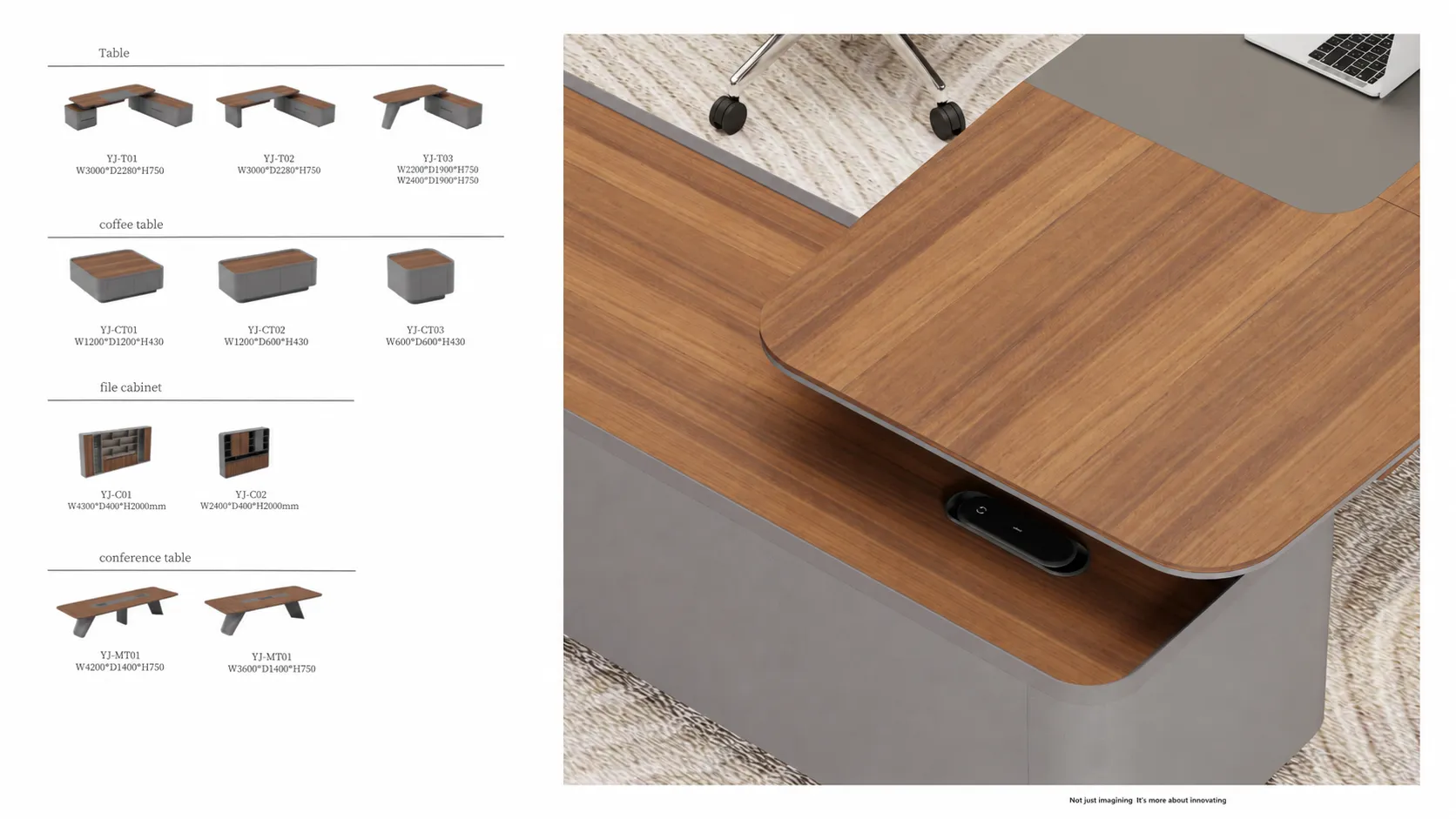
The brand may give a product a new name, but the factory still needs a precise reference for what it must make. Keep the brand’s sales code connected to the factory item, dimensions, configuration, finish and approved revision.
FENLERN’s current brochure illustrates why the configuration matters. The YJ-T03 manager desk is listed in two widths, 2200 mm and 2400 mm, with a depth of 1900 mm and a height of 750 mm. Ordering only by the model name would leave the size unresolved.
The table below uses invented brand codes to show how the connection can be recorded. It is an illustration, not an actual private label order or confirmation that a particular adaptation is available.
| Illustrative brand code | FENLERN catalogue reference | Size | Additional order details |
|---|---|---|---|
| MD-220 | YJ-T03 | W2200 × D1900 × H750 mm | Approved finish, configuration, branding and drawing revision. |
| MD-240 | YJ-T03 | W2400 × D1900 × H750 mm | Approved finish, configuration, branding and drawing revision. |
Use the same relationship in quotations, purchase orders, carton information and service records. If two variants have different cabinet orientations, electrical accessories or finishes, distinguish them clearly. A photograph or catalogue name alone may not identify the correct replacement part later.
3. Approve Branding and Product Information
Agree where the buyer’s brand will appear before preparing artwork. Product labels, badges, carton printing and instruction covers are possible discussion points; availability depends on the product, material, method and order scope.
For each agreed application, record the artwork version, dimensions, position, color reference and attachment or printing method. Review the result at its intended size. A mark that reads well on a screen may become difficult to read on a small label.
Keep the sales description consistent with the product
Product copy, photographs and assembly instructions should describe the approved configuration. If the selected desk has a fixed cabinet orientation, the brand’s listing should not describe it as reversible. If a finish looks like stone, the material description needs to state the actual construction.
Confirm who provides and checks the information for the destination market, including the languages and any required product documentation. Branding changes should not be treated as permission to remove required product identification. Claims about testing, materials or performance need evidence for the supplied product.
Assign one person on the brand side to consolidate comments. Design, sales and warehouse teams may review different details, but production needs a single approved instruction for each item.
4. Review Product Samples and Packaging Separately
Product approval and packaging approval answer different questions. The first confirms the agreed furniture details. The second confirms how the item will be protected, identified, received and assembled.
A finish swatch cannot confirm the position of a badge, and approval of a prototype does not automatically approve the carton artwork. Set the review scope according to what is new or uncertain.
| Approval | What to review | Reference to retain |
|---|---|---|
| Furniture | Dimensions, construction, finish, hardware, orientation and specified functions. | Approved drawings, specification and relevant sample records. |
| Branding | Artwork, position, size, legibility and agreed application method. | Dated artwork and approved proof or physical sample, as applicable. |
| Packaging and instructions | Protection, carton count, item identification, loose hardware and assembly information. | Approved packing specification, label proof and instruction revision. |
Record unresolved items rather than marking the whole package “approved” with informal exceptions. If the drawer handle changes during sampling, update the specification, relevant images and instructions before releasing affected work.
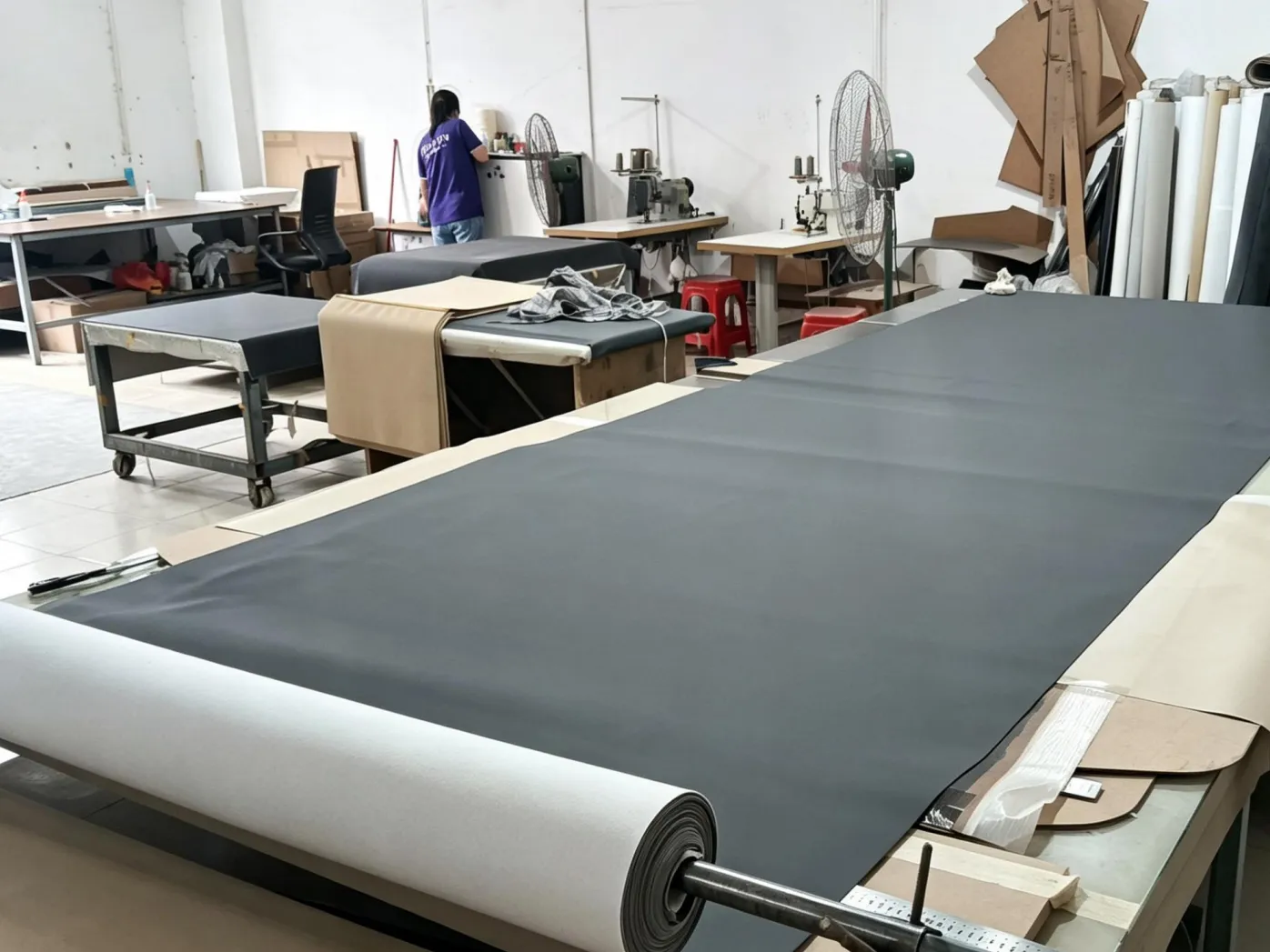
For upholstered items, connect the material reference and color to the correct product variant. A lounge chair sold under one collection name may still have several upholstery options that need separate identification.
5. Build a Schedule Around Approval Milestones
A target launch date is useful, but it needs a plan behind it. Separate product selection, drawing development, sample review, artwork approval, material preparation, manufacturing and packing. Include the brand’s review time as well as the factory’s work.
Agree what must be complete before each stage starts. The deposit, final specification and sample decisions may all be prerequisites for production release under the order terms. Packaging artwork may have a different approval deadline. Record these dependencies so a late decision does not disappear inside a general lead-time estimate.
Some tasks can proceed together, but only when their inputs are stable. Instruction layout can begin early; final illustrations need to reflect the approved product. Carton design can be discussed early; its dimensions and protection need the packing arrangement to be settled.
Control changes after release
When a requested component is unavailable or the brand asks for a revision, identify which orders and variants are affected. Review the effect on appearance, fit, cost and timing before accepting a substitute.
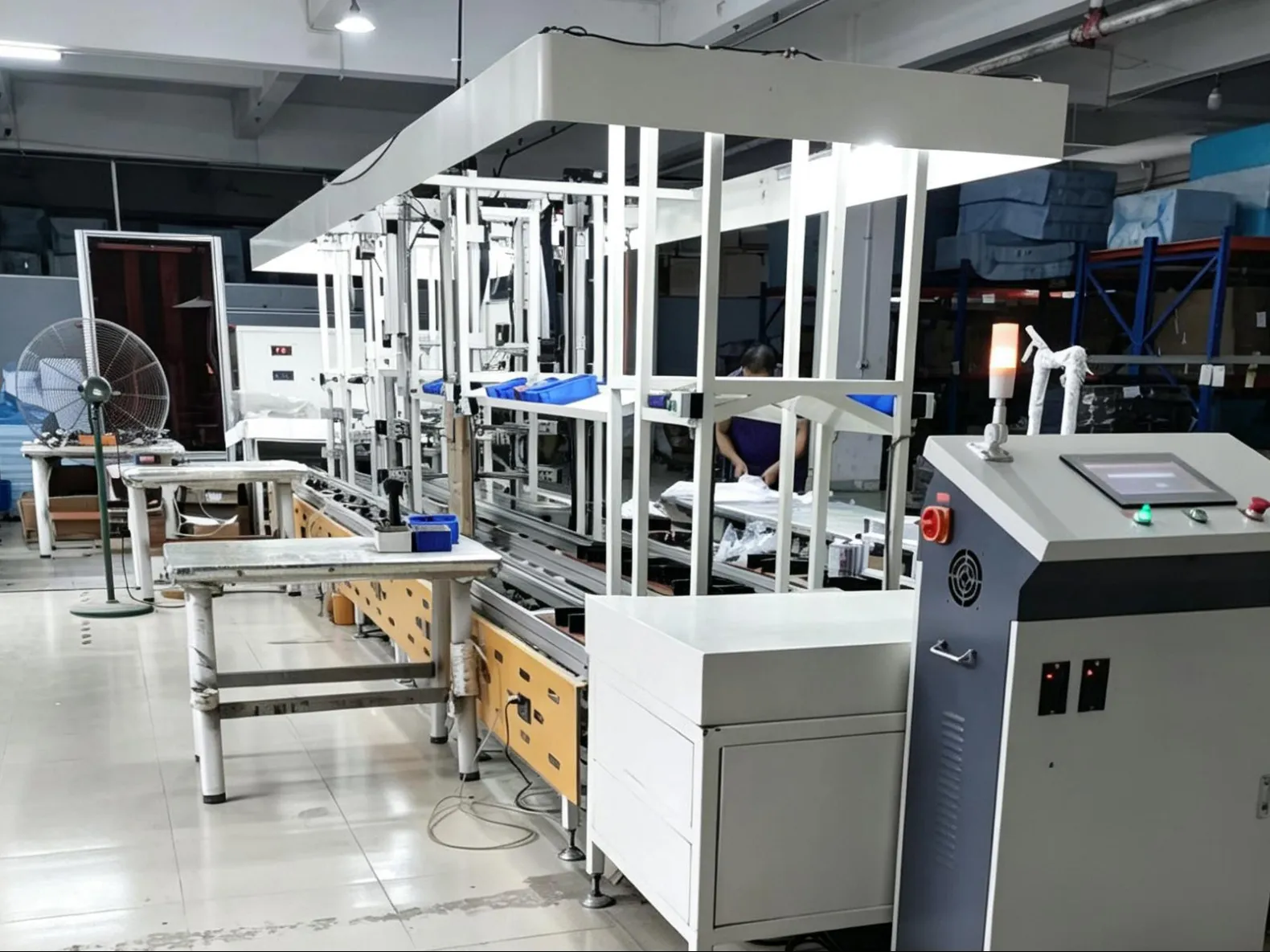
For height-adjustable desks, the agreed model needs to identify the relevant frame, controls and accessories. A similar-looking component is not enough to establish that two configurations are interchangeable.
6. Prepare the Receiving and Installation Handover
Packaging should help the next team identify what has arrived. Where a product travels in several cartons, agree how each carton will show its place in the complete set. Link the references to the packing list and the brand’s order code.
Warehouse replenishment and direct-to-project delivery may need different arrangements. Warehouse teams need clear variant identification for storage and picking. A project installation team may also need floor, room or installation-phase references. Confirm these requirements before labels are printed.
Define who receives the goods, records shortages or visible damage, and reports issues to the brand and manufacturer. Assembly instructions should identify the relevant version and hardware. Agree any spare-parts provision rather than assuming that additional fittings are included.
For overseas orders, distinguish product supply and shipping arrangements from unloading, movement into the building and installation. Those services depend on the agreed scope. A private label arrangement alone does not establish who performs them.
7. Keep Repeat Orders and Service Parts Identifiable
The second order should refer to the approved product record, not simply “the same as last time.” Use the brand code, factory reference, configuration and revision to confirm what is being reordered.
Check material and component availability again before confirming a repeat order. If a finish or fitting has changed, explain the difference and agree whether another sample or approval is required. Keep old and new versions distinguishable where service parts differ.
For a service request, ask for the brand model, order reference, affected component and clear photographs. This gives the factory a better starting point than a sales name alone. Agree how the brand will handle customer communication and how replacement parts or other remedies will be assessed.
Discuss replenishment quantities, forecast updates, support responsibilities and warranty terms before the range is launched. These details help the brand plan its commitments without relying on assumptions about future availability.
Start a Private Label Office Furniture Discussion with FENLERN
Founded in Foshan in 2017, FENLERN combines office furniture design and manufacturing with complete workspace solutions. Its product collections provide a starting point for discussing coordinated desks, storage, meeting furniture and other office requirements.
For a private label enquiry, send your intended product range, initial quantities, target market, preferred finishes and required date. Include brand artwork and packaging requirements where available. Mark which products can use existing configurations and which need further development.
The next discussion can then focus on feasibility, sample needs, branding options and the responsibilities to include in the quotation. For the wider customization process, read Customized Office Furniture: From Design Brief to Production.
Discuss Your Private Label Furniture Range
Share your product list, quantities and branding requirements with the FENLERN team.
Frequently Asked Questions
Does private label office furniture require a completely new design?
No. A project may use an existing range, selected adaptations or a new design. Confirm what development and branding work is included for each product.
Can one collection include several furniture categories?
Yes, but each item still needs its own specification and approval. Coordinate shared finishes and branding while keeping model, size and configuration differences clear.
What are the minimum order quantities?
They depend on the item, finish, customization and branding method. Request quantities by model and finish, and confirm any separate requirements for printed packaging or dedicated components.
Does private label supply include exclusivity?
It should not be assumed. Any requested exclusivity needs an explicit agreement defining the products and scope involved.
What should be ready before the first order?
Prepare the product list, quantities, specifications, brand files and delivery requirements. Agree the samples and documents that must be approved before production and packing begin.

