
From Approved Sample to Batch Production: Our Office Furniture Checks
An approved desk can look right, feel solid and fit the room. The next question is whether the production order will reproduce the details that made it right: the cabinet orientation, the cable opening, the finish, the fittings and the way the parts assemble.
Custom office furniture sample approval establishes the reference for that work. It should identify what the buyer has accepted, which products the decision covers and what still needs to be resolved before production starts.
At FENLERN, we bring office furniture design and manufacturing into the same project discussion. Below are the checks to work through with our team when moving from a sample to a commercial order. The sample scope, inspection methods and release requirements are agreed for the particular products and project.
1. Define What the Sample Must Prove
Start with the decisions that remain open. A new finish on an established desk design raises different questions from a new workstation connection or a redesigned storage unit. The sample plan should address those questions explicitly.
A material sample helps confirm the selected surface. A component sample can show an edge profile or connection. A full furniture sample allows the team to review the assembled configuration. A mockup may be physical or digital, but its usefulness depends on what it represents: a shape study built with temporary materials does not establish the final construction.
| Reference | Useful for reviewing | Still to be confirmed |
|---|---|---|
| Drawing or rendering | Layout, proportions, dimensions specified on drawings and design intent. | Actual material appearance, assembly and physical function. |
| Material or component sample | Selected finish, texture, edge or a particular construction detail. | The complete furniture item and its other components. |
| Full furniture sample | The assembled product, specified functions and the interaction of its parts. | Which variants it represents, production consistency and packing arrangements. |
If a sample uses a temporary handle or substitute panel, identify it before the review. Record what it cannot approve. An attractive sample with an unresolved component should not become an ambiguous production instruction.
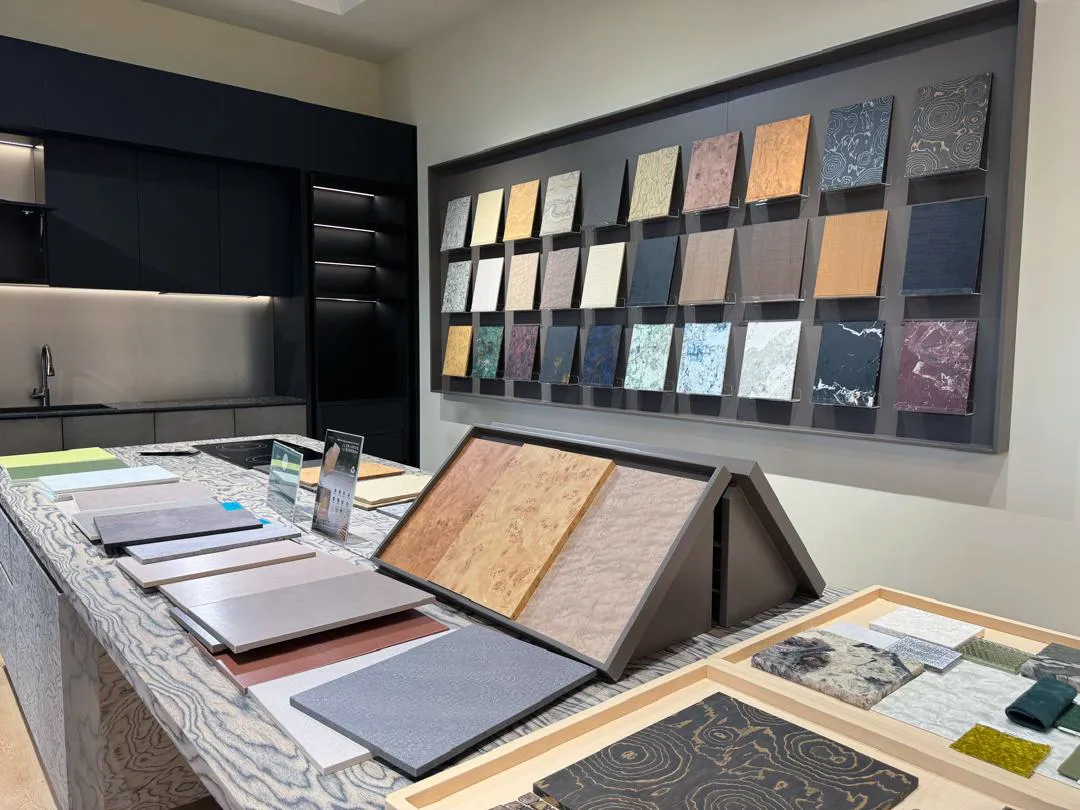
See the material samples below. They provide a useful starting point for surface selection. The selected reference still needs to be assigned to a particular product and component before it becomes part of an order.
2. Review the Commercial Office Configuration
Commercial projects often repeat a small detail across many desks or combine several configurations in one delivery. Review the sample with the furniture schedule and installation layout beside it.
Consider an illustrative order containing left-return and right-return manager desks. Approving one left-return sample does not settle the other version’s cable route, drawer clearance or fixing positions. Identify the shared details and the details requiring a separate drawing or sample check.
For workstations, consider how units connect in the intended arrangement. For meeting tables, check the assembled sections and the relationship between cable access and supporting parts. For storage, review door and drawer operation with the specified hardware fitted.
| Review area | Questions for the sample review |
|---|---|
| Dimensions and orientation | Does the sample match the current drawing? Are returns, storage positions and connection points correct for the specified variant? |
| Materials and visible details | Are the selected surfaces, edges, grain directions and exposed components represented? |
| Assembly and fittings | Do the intended fasteners and fittings connect the parts correctly? Are doors and drawers aligned and operable? |
| Cable management | Are openings, trays and access panels in the agreed positions? Can the intended equipment be accommodated and accessed? |
| Use and performance | Which functional checks and performance evidence are required for this model and its intended commercial use? |
For powered furniture, confirm the specified frame, controller and electrical accessories. Demonstrating movement during a sample review does not establish a load rating or long-term durability. Where the project requires testing, agree the applicable method and evidence separately.
A practical assembly review also differs from product qualification testing. Keep those decisions distinct in the approval record so a successful demonstration is not mistaken for proof of every performance requirement.
3. Write an Approval Record That Production Can Use
“Looks good” leaves the production team with questions. Which version was reviewed? Was the finish accepted? Did the buyer approve the new handle or the original one?
A useful approval record identifies the sample, the approved documents and the scope of the decision. Keep it connected to the purchase order and the relevant product variants.
- Identity: project, product code, sample ID and drawing revision.
- Scope: dimensions, materials, finishes, fittings and functions reviewed.
- Evidence: dated photographs, measured results and the physical references to retain where agreed.
- Decision: approved, revision required or an explicitly limited approval.
- Open items: the required correction, responsible person and evidence needed to close it.
- Authorization: reviewer, date and the work that may proceed.
For example, “finish approved; cable opening location requires revision” is a limited decision. It should identify whether any unaffected preparation may proceed while work depending on the opening remains on hold. A comment should never leave the factory guessing whether it changes the drawing.
For remote reviews, agree a sequence that includes the sample ID, overall views, measurements and demonstrations of the relevant moving parts. Ask for close views of the areas being decided. Use physical finish samples where appearance is important; screen images cannot fully establish color, texture or feel. For material comparisons, see how we match finishes across custom office furniture.
Assign one buyer-side contact to consolidate design, procurement and installer comments. The final instruction needs to be consistent even when several people contribute to it.
4. Confirm Readiness for Batch Production
Once the sample decision is complete, bring the order information into line with it. A revised sample beside an outdated parts list creates two competing instructions.
The release package should connect the agreed drawings, bill of materials, finish references, hardware specification, quantities by variant and relevant sample records. Include the inspection and packaging requirements that affect manufacturing.
Resolve conflicts before releasing the affected work. If a dimension on the drawing differs from the sample, establish the intended requirement and update the record. Do not assume that the photograph, sample or latest message automatically overrides the written specification.
Production timing also needs a clear starting point. Confirm the required deposit, final approvals and any material prerequisites under the order terms. Allow time for corrections and buyer review when planning backwards from the installation date.
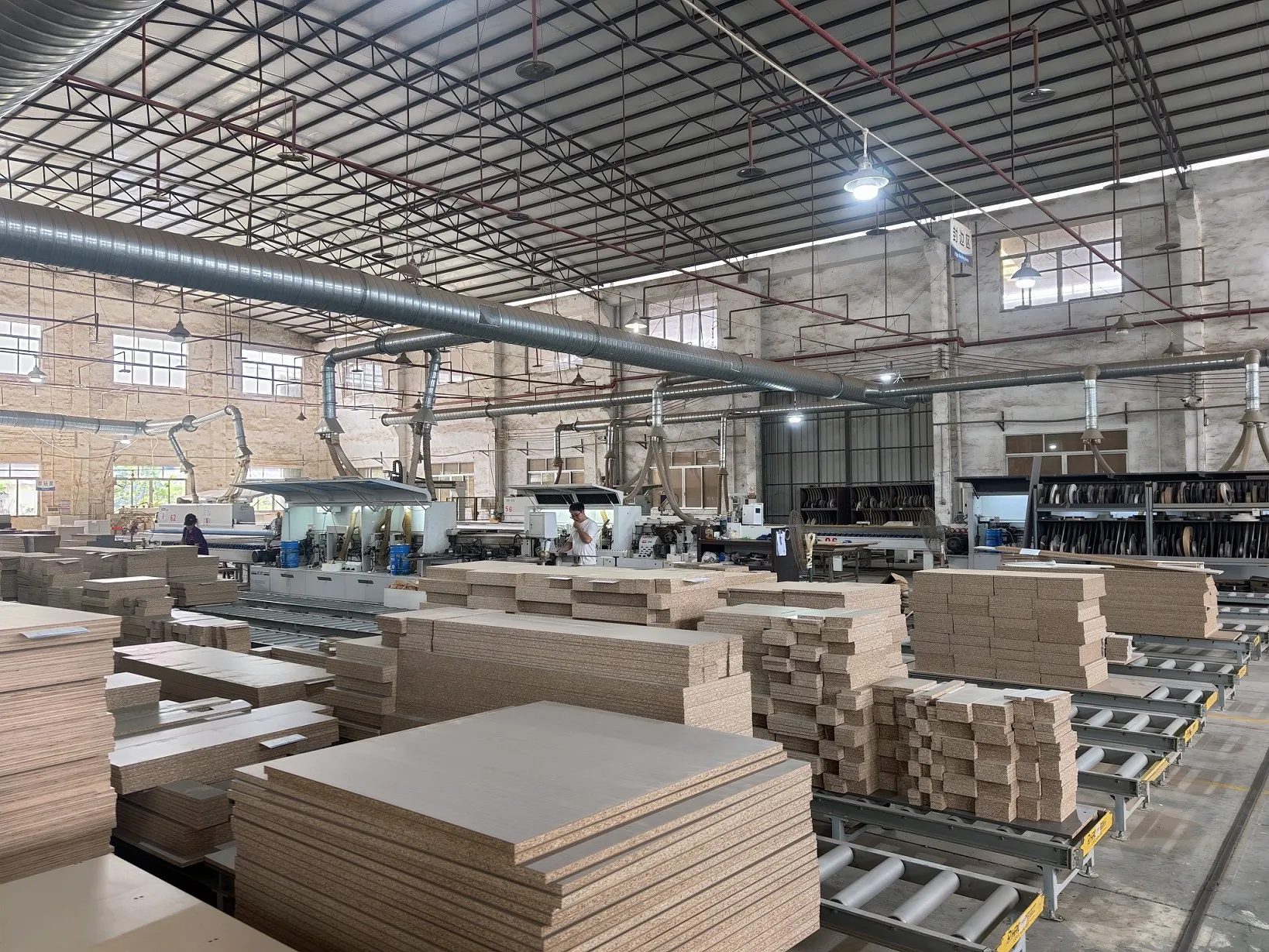
The panel production area below shows why this handover matters. Once a component is repeated across a batch, an unclear instruction can affect many parts rather than a single sample.
5. Check the Details That Can Repeat Across a Batch
Inspection is most useful when it addresses a particular manufacturing risk. A hole-position error should be found before it is repeated across an order. A finish substitution needs attention before it reaches multiple furniture groups.
Discuss the following checkpoints when setting the production review scope:
- Material preparation: identify the specified panels, surface references and fittings before they enter the relevant work.
- Initial parts after setup: verify the dimensions, machining and component relationships that will be repeated.
- Work in progress: check the features affected by the operation, such as edges, drilled positions or surface treatment.
- Representative assembly: confirm that production parts fit and function together in the specified configuration.
Choose measuring points that relate to fit and use. The position of a connector relative to an edge can matter as much as the overall panel size. For a multi-part desk, measurements should support the relationship between components, not just a list of independent dimensions.
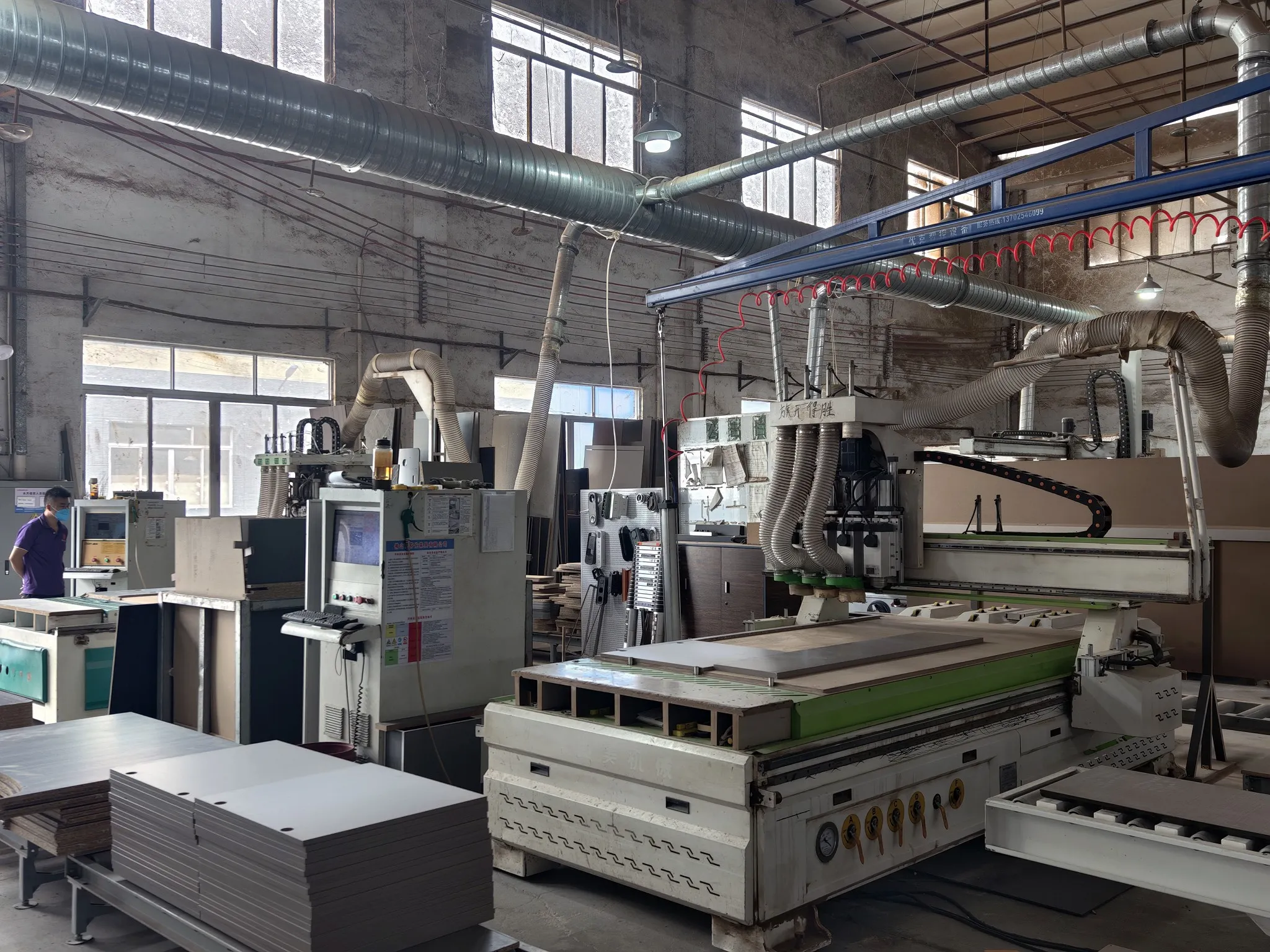
Our panel machining equipment is shown below. The photograph illustrates production capability; order-specific measurements and review results belong in the inspection record.
Agree the inspection coverage
The number and selection of units to inspect depend on the order, its variants and the agreed inspection plan. A mixed shipment needs a deliberate approach to the different models and configurations. Inspecting one familiar desk may leave a new cabinet design unreviewed.
If acceptance sampling is required, define the lot, sampling plan, defect classifications and acceptance rules before inspection. A sample-based decision is not a statement that every unit was inspected. Safety and required performance checks also need their own defined treatment.
6. Review Assembly, Packaging and Identification
For furniture supplied in parts, assembly belongs in the quality discussion. Review a representative packed set against its parts list and instructions. Confirm that the supplied fittings and the documented assembly sequence correspond to the approved product.
A project installer needs more than an undamaged carton. The packaging should identify which product and configuration the contents belong to. Where one item uses several cartons, connect the carton sequence to the complete set and packing list.
For phased office deliveries, agree whether floor, room or installation-area references are needed. These markings must follow the buyer’s final schedule. A correctly manufactured cabinet can still delay installation if it arrives under an unrecognizable code.
Confirm the protection required for exposed edges, finished surfaces and loose hardware. The route from factory to site matters: container delivery to one warehouse and repeated distribution handling place different demands on the pack. Any transport testing should follow the agreed packaging and distribution requirements.
7. Resolve Deviations Before Shipment Release
When a discrepancy is found, record the affected item, location, requirement and observed result. A photograph helps show a scratch; a measured result is more useful for a misplaced fixing hole. Connect the evidence to the product and inspection record.
Then decide whether the issue is isolated or may affect other parts made with the same material, setup or instruction. Identify the affected work and hold its release while the correction is agreed.
A workable closure sequence is to record the correction, verify the result and document the release decision. Reworking one photographed unit does not establish that the rest of the affected batch has been addressed.
Material or hardware substitutions also require review. If a change affects the approved specification, confirm the revised appearance, fit or function and update the relevant documents before proceeding. A similar-looking component is not automatically an acceptable replacement.
Where a buyer appoints an independent inspector, agree the visit scope, references and reporting requirements early enough to allow access and any necessary correction. Shipment release and the balance payment should follow the agreed order terms and approval responsibilities.
8. Keep the Reference for Delivery and Repeat Orders
The receiving team should be able to connect delivered cartons to the order, product variants and packing list. Agree how shortages, transport damage and product discrepancies will be recorded and reported.
Retain the final specification, approved revisions and agreed inspection records for future orders and service parts. A replacement desktop needs its size, drilling pattern, edge and finish identified, not simply a collection name.
Sample approval, production release and shipment release are separate decisions. Keeping a clear record at each stage gives the buyer and manufacturer a practical way to resolve questions before they become installation problems.
Plan Your Sample Review with FENLERN
FENLERN is a Foshan-based office furniture manufacturer established in 2017, combining product development, design and manufacturing. Send your drawings, furniture schedule, quantities by configuration and target delivery date. Include the details that need sample confirmation and any required inspection or testing documentation so we can discuss the review scope.
For the complete development process, read Customized Office Furniture: From Design Brief to Production.
Questions About Custom Office Furniture Sample Approval
Does every product variant need a full sample?
Not necessarily. Agree which details are shared and which differ. A new structural arrangement, orientation or component may need additional review even when the finish is unchanged.
Can I approve a sample remotely?
Remote review can cover identified dimensions, configuration and demonstrated functions when supported by suitable evidence. Agree its limits and arrange physical material review where screen images are insufficient.
Does sample approval mean the order is ready to ship?
No. It establishes the agreed product reference. Production results, packing completeness and shipment release still need to follow the order’s requirements.
What if a detail changes after approval?
Identify the affected products and work, review the change and issue an updated approval record. Keep the drawings, material references and inspection requirements consistent with the accepted revision.

