
How to Choose a Modern Office Furniture Wholesaler for Commercial Projects
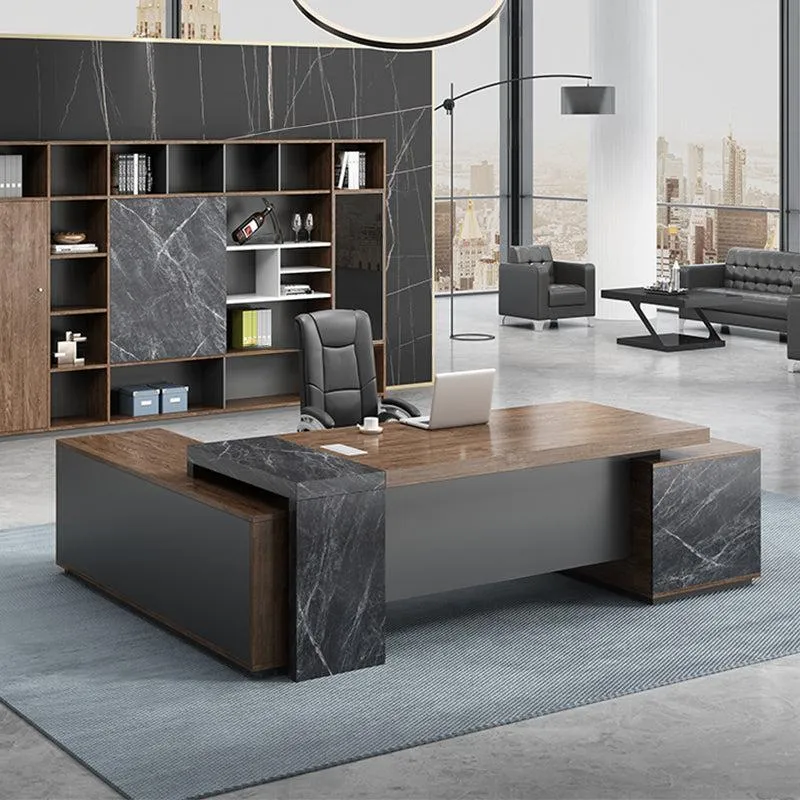
Choosing a modern office furniture wholesaler is an important decision for any business furnishing a commercial workspace, supplying furniture to multiple clients, or managing a large-scale office project. The right partner can help maintain product consistency, control purchasing costs, coordinate customization, and keep delivery schedules on track. The wrong one can create problems that are difficult to resolve once production has started.
For B2B buyers, comparing suppliers involves more than reviewing a catalog or asking for a quotation. You need to understand what a supplier can actually deliver, how its products will perform in daily use, and whether its production and communication processes can support your project from the first specification to the final shipment.
This guide explains how to evaluate an office furniture wholesaler, which questions to ask before placing an order, and how to identify a partner that can support your business beyond a single purchase.
1. Define Your Commercial Project Requirements Before Comparing Wholesalers
Before contacting suppliers, establish what your project needs. A wholesaler that is suitable for a small office renovation may not be the right choice for a multi-floor corporate office, a hotel business center, or a distributor managing repeat orders for different customers.
Start by organizing your requirements into four areas.
Project Scope and Product Categories
List the furniture categories you need, such as office desks, ergonomic chairs, workstations, conference tables, storage cabinets, reception furniture, and collaborative seating. Determine whether you need individual products or a coordinated range for an entire workspace.
A supplier with a suitable product portfolio can simplify purchasing and help maintain a consistent design across different areas. However, product range alone should not determine your decision. You also need to confirm that the supplier can provide the specific models, finishes, dimensions, and quantities required.
Quantity, Budget, and Purchasing Schedule
Estimate the total quantity for each product category and identify which items are essential for the initial delivery. If your project will be completed in phases, explain the expected order schedule and potential repeat purchases.
This information helps suppliers assess production requirements and provide more meaningful quotations. It also allows you to compare offers on an equivalent basis instead of choosing the lowest headline price.
Design and Functional Requirements
Consider how the furniture will be used. Individual workstations may require effective cable management and ergonomic seating, while meeting rooms need suitable table dimensions, chair clearance, and space for presentation equipment.
For projects involving multiple departments or locations, establish consistent specifications early. A shared specification sheet reduces the risk of ordering products that look similar in a catalog but differ in dimensions, materials, or finish.
Delivery and Installation Conditions
Identify the delivery destination, access restrictions, unloading arrangements, installation responsibilities, and required completion date. International buyers should also clarify packaging, shipping terms, export documentation, and who is responsible for each stage of transportation.
Practical tip: Prepare a project brief before requesting quotations. Include product specifications, estimated quantities, target delivery dates, destination, customization needs, and applicable compliance requirements. Suppliers can then respond against the same requirements, making comparisons more reliable.
2. Evaluate the Wholesaler’s Product Range and Customization Capabilities

A modern office furniture wholesaler should offer more than a collection of attractive products. Its range should support the functional, spatial, and design requirements of your commercial projects.
Look for a Coordinated Product Portfolio
Review whether the supplier can provide compatible desks, workstations, seating, conference furniture, and storage solutions. A coordinated range can make it easier to maintain a consistent appearance across private offices, open-plan work areas, meeting rooms, and reception spaces.
For distributors, a well-organized portfolio can also simplify product selection and repeat purchasing. For designers and fit-out contractors, compatible products reduce the effort required to coordinate different furniture categories.
You can explore our office furniture solutions to understand how different furniture categories can be considered together when planning a commercial workspace.
Confirm What Customization Actually Includes
Customization can mean different things to different suppliers. Some offer a choice of standard finishes, while others may support changes to dimensions, materials, upholstery, configurations, or product details.
Ask suppliers to explain which modifications are available, whether they affect minimum order quantities, and how they influence cost and lead time. If a design requires a non-standard specification, request technical drawings or a sample before approving full production.
For private-label buyers, confirm whether branding, packaging, labeling, and product documentation can be adapted to your requirements. These details should be agreed upon before production rather than added after the order is underway.
Assess Design Support Before Production
For more complex projects, design assistance can be valuable. Layout planning, technical drawings, and 3D or VR visualization can help buyers review the proposed arrangement before committing to production.
These tools are particularly useful when a project includes multiple furniture categories or requires coordination between designers, contractors, and procurement teams. They can help identify space conflicts and specification issues early, when changes are generally easier to manage.
Customization should ultimately solve a project requirement, not introduce unnecessary complexity. The best option is one that meets the brief while remaining practical to manufacture, deliver, assemble, and maintain.
3. Verify Product Quality, Materials, and Batch Consistency

Product quality is one of the most important considerations when selecting a modern office furniture wholesaler. For commercial buyers, quality must be assessed across the full order, not just the sample shown during the quotation stage.
Examine Materials and Construction
Ask for clear information about the materials used in each product. Depending on the design, this may include panel substrates, surface finishes, metal frames, hardware, upholstery, foam, and chair mechanisms.
Do not assume that products with a similar appearance have the same construction or performance. Request relevant specifications and, where necessary, material samples. Check edge finishing, joints, hardware operation, structural stability, and the quality of moving components.
The appropriate specification depends on the intended use, expected frequency of use, maintenance requirements, and budget. A workstation for everyday commercial use may need different performance characteristics from furniture intended for a lightly used meeting room.
Request Samples and Written Specifications
A sample allows you to evaluate color, texture, assembly, and finish quality before approving a larger order. It also provides a reference for subsequent production.
Record the approved materials, dimensions, color codes, hardware, and other important details in writing. Where visual consistency is critical, retain approved samples or documented reference images and clarify how production batches will be checked against them.
A verbal assurance that products will be “the same” is not a substitute for an agreed specification.
Ask About Quality-Control Procedures
A reliable supplier should be able to explain how it checks products during production and before shipment. Depending on the product and order, this may include incoming material checks, in-process inspections, dimensional checks, functional testing, final inspection, and packaging verification.
Ask how defects are recorded, who approves corrective action, and what happens if a product does not meet the agreed specification. For larger orders, discuss whether inspection reports, photographs, or third-party inspections can be provided.
Where relevant to the product and destination market, ask for applicable test reports or certifications and verify that they cover the actual model being purchased.
Plan for Repeat Orders
Batch consistency matters when furniture will be delivered in stages or reordered for additional offices. Changes in finish, dimensions, components, or upholstery can make later additions difficult to match.
Ask whether the supplier can retain product specifications and approved finishes for future orders. Clarify how material substitutions or product revisions will be communicated and approved.
For distributors and multi-site buyers, this is an important part of long-term supply planning.
4. Compare Pricing Based on Total Project Cost, Not Unit Price Alone
Two quotations may appear similar while covering very different products and services. Before selecting a wholesaler, make sure you understand exactly what each offer includes.
Compare Quotations on an Equivalent Basis
Check the following items across suppliers:
- Product model, dimensions, materials, and finish.
- Included accessories, hardware, and components.
- Customization charges and minimum order quantities.
- Packaging requirements and costs.
- Tooling, sample, or development charges, where applicable.
- Shipping terms, freight costs, and insurance responsibilities.
- Installation, spare parts, warranty, and after-sales arrangements.
A lower quotation may reflect a different specification or exclude costs that appear later. A higher quotation may include services or quality controls that reduce work elsewhere in the project. The objective is to compare equivalent deliverables, not just the final number on the first page.
Calculate the Total Cost of Ownership
The purchase price is only one part of the cost of commercial furniture. Depending on the project, the full cost may also include freight, import duties, local transportation, assembly, installation, maintenance, replacement parts, and the cost of delays.
Furniture that requires frequent repairs or premature replacement can become more expensive over time, even if its initial price is lower.
A useful comparison should therefore consider expected service life, maintenance needs, warranty coverage, and the operational impact of product failure. These factors help buyers make a more informed decision about value.
Understand Payment Terms and Commercial Conditions
Before placing an order, clarify the deposit, balance payment, production milestones, lead time, and conditions for changes or cancellation. International transactions should also define the agreed shipping terms and the point at which responsibility for transport-related costs and risks transfers.
If the project depends on a fixed opening date, discuss how schedule changes will be communicated and what remedies are available if agreed milestones are missed. Put important commercial commitments in the purchase contract.
5. Assess Production Capacity and Delivery Reliability
A supplier may offer suitable products and competitive prices but still be a poor fit if it cannot deliver the required quantities on time.
Verify Capacity Against Your Actual Order
Ask how the supplier plans to fulfill your order, including production scheduling, material availability, and coordination across product categories. For large or phased projects, clarify whether all products will be produced together or released in separate batches.
Production capacity should be evaluated against your specific order and schedule rather than general claims about factory size. If the supplier works with multiple manufacturing partners, ask who is responsible for coordinating specifications and quality across them.
Establish Realistic Lead Times
Request a lead-time breakdown covering sample approval, material preparation, production, inspection, packaging, and shipment. Each stage can affect the final delivery date.
Clarify when the lead time begins. For customized products, the clock may start only after drawings, samples, materials, or other specifications have been approved.
For phased deliveries, confirm the quantity and expected dispatch date for each shipment. This is especially important when furniture must arrive in sequence with construction, electrical work, or other fit-out activities.
Review Packaging and Shipment Preparation
Furniture can be damaged during handling or transportation if packaging is not suited to the product and shipping method. Ask how items are protected, labeled, and packed, and whether the packaging supports efficient unloading and installation.
For multi-room or multi-floor projects, consider requesting carton labels that identify the product, quantity, destination area, or installation sequence. Clear labeling can reduce sorting errors and save time on site.
Agree on a Communication Process
Identify the person responsible for your order and establish a clear reporting schedule. Ask how the supplier communicates production progress, delays, specification changes, and quality issues.
A dependable partner should communicate problems early enough for the buyer to make decisions. Consistent updates are more useful than optimistic delivery promises that are not supported by production information.
6. Evaluate Project Management, Installation, and After-Sales Support

The supplier’s responsibility should be clear even when its services do not extend to every stage of the project. Furniture procurement often involves designers, contractors, logistics providers, installers, and the client’s own facilities team.
Clarify Responsibilities Before Ordering
Determine who is responsible for final measurements, technical approvals, shipment coordination, site delivery, installation, and handover. If the wholesaler provides design or project support, clarify the scope and deliverables.
A responsibility matrix can be useful for larger projects. It identifies who supplies information, who approves decisions, and who resolves problems at each stage.
Confirm Installation Requirements
If installation is included, ask whether the supplier provides installation instructions, assembly documentation, parts lists, and support for local installers. Confirm whether site conditions, tools, access, and labor are the buyer’s responsibility.
If installation is handled by a third party, the furniture supplier should still provide accurate product information and communicate any assembly or handling requirements before the shipment arrives.
Review Warranty and Replacement Procedures
Ask what the warranty covers, how long it lasts, and which exclusions apply. Clarify how defects or transit damage should be reported, what evidence is required, and how replacement parts or products will be supplied.
For overseas buyers, the practical process matters as much as the written warranty. Shipping a replacement component internationally can take time, so confirm the available support channels and expected response process.
A clear after-sales arrangement helps protect the project after installation and provides a more reliable basis for future orders.
7. Check Supplier Experience, Transparency, and Long-Term Fit
A wholesaler’s suitability cannot be established through a catalog alone. You need evidence that its experience and working methods match your requirements.
Review Relevant Project Experience
Ask for examples of projects similar in size, product mix, customization level, or destination market to your own. A supplier experienced in standard office desks may have different capabilities from one that regularly coordinates complete workplace furniture packages.
When reviewing case studies, look for specific information about the scope, products supplied, challenges addressed, and responsibilities handled. Relevant experience is more useful than a long list of unrelated clients.
Examine the Quality of Communication
Notice how the supplier responds during the quotation stage. Are technical questions answered clearly? Are limitations disclosed? Are changes documented? Does the supplier explain trade-offs rather than promising that every request is possible?
The quotation process often reveals how the relationship will work once production begins. Clear, consistent communication reduces the risk of misunderstandings later.
Understand the Supplier’s Role in the Supply Chain
A wholesaler, trading company, manufacturer, and project furniture provider may offer different levels of control and service. None should be judged by its label alone.
The important questions are who controls production, who approves materials and specifications, who performs inspections, and who is accountable if a problem occurs. If manufacturing is outsourced, transparency about the arrangement becomes especially important.
For buyers who need repeated customization or close production coordination, direct access to technical and manufacturing teams may be valuable. For buyers prioritizing a broad multi-brand selection, a wholesaler or dealer with a strong supplier network may be more appropriate.
Choose the operating model that best fits your project rather than assuming one type of supplier is always superior.
8. Use a Structured Supplier Evaluation Checklist
Once you have shortlisted potential suppliers, score them against the same criteria. This makes the final decision more transparent and reduces the influence of price or presentation alone.
The following example can be adapted to your project’s priorities.
| Evaluation criterion | Suggested weight | Evidence to review |
| Product quality and consistency | 25% | Samples, specifications, inspection procedures |
| Production capacity and delivery | 20% | Production plan, lead times, shipment schedule |
| Customization and product range | 15% | Drawings, material options, sample approval |
| Total cost and commercial terms | 15% | Comparable quotations, payment and shipping terms |
| Project coordination and support | 15% | Communication process, responsibilities, after-sales terms |
| Relevant experience and transparency | 10% | Comparable projects, references, documented processes |
| Total | 100% |
These weights are illustrative, not an industry standard. Adjust them to reflect the project’s risks. A time-critical office rollout may place greater emphasis on delivery reliability, while a private-label program may prioritize customization and repeat production.
You can score each supplier from 1 to 5 for every criterion, where 1 means the evidence is poor or missing and 5 means the requirements are well supported by verifiable evidence.
Do not award a high score simply because a supplier makes a convincing promise. Request documents, samples, references, or written commitments where appropriate.
A supplier that scores slightly lower overall may still be unsuitable if it fails a mandatory requirement, such as a critical delivery date, essential certification, or non-negotiable product specification. Treat these requirements as pass-or-fail conditions before comparing weighted scores.
9. Why Work with Fenlern for Commercial Office Furniture Projects?
For buyers sourcing furniture across several product categories, the value of a supplier lies in how well it connects product selection, customization, design coordination, production, and delivery.
Fenlern works with overseas office furniture wholesalers, design firms, private-label and OEM/ODM clients, corporate procurement teams, and fit-out or installation contractors. Its project approach can support buyers who need to coordinate furniture requirements across different workplace areas rather than purchase isolated items.
Depending on the project scope, relevant areas of collaboration may include:
- Product selection:Coordinating desks, seating, workstations, meeting furniture, and other office furniture categories around the project brief.
- Customization coordination:Reviewing product specifications, material and finish requirements, and applicable OEM/ODM needs before production.
- Design visualization:Using layout planning and 3D or VR visualization where appropriate to review proposed furniture arrangements before implementation.
- Project coordination:Aligning product requirements and delivery planning with the needs of the buyer, designer, contractor, or other project stakeholders.
For overseas buyers, clear specifications and documented approvals are particularly important. They help reduce misunderstandings between the initial brief, the approved sample, the manufactured product, and the final shipment.
Every project has different requirements, so the appropriate product range, customization scope, lead time, and delivery arrangements should be confirmed with Fenlern before an order is placed.
If you are planning a commercial office furniture project or developing a wholesale product range, share your product list, estimated quantities, target market, and customization requirements with the Fenlern team to discuss a suitable sourcing approach.
Frequently Asked Questions
What should I look for in a modern office furniture wholesaler?
Look for consistent product quality, competitive pricing, customization options, reliable delivery, and responsive after-sales support. Fenlern helps B2B buyers explore office furniture solutions based on their project requirements.
Does Fenlern supply office furniture for commercial projects?
Yes, Fenlern works with B2B buyers sourcing office furniture for commercial applications, wholesale distribution, and customized projects. Product selection and supply arrangements depend on the specific project requirements.
Can Fenlern provide customized office furniture?
Fenlern can discuss customization requirements based on the selected products and project needs. Available options, minimum order quantities, and lead times should be confirmed with our team.
How can I compare office furniture wholesalers?
Compare product specifications, material quality, total costs, production lead times, and warranty terms. Request quotations based on the same requirements to make a fair comparison.
How can I request a quotation from Fenlern?
Share your product list, estimated quantities, preferred designs, and delivery destination with Fenlern. These details help our team better understand your needs and discuss suitable solutions.
Final Thoughts
Choosing a modern office furniture wholesaler is not simply about finding the lowest price or the widest product range. For commercial buyers, the decision should be based on product quality, customization capabilities, production planning, delivery coordination, and the supplier’s ability to support the project over time.
At Fenlern, we recognize the importance of understanding each buyer’s requirements before recommending an appropriate office furniture sourcing approach. Whether you are purchasing furniture for a commercial workspace, developing a wholesale product range, or exploring customized solutions for your business, a clear project brief and well-defined specifications provide a stronger starting point for cooperation.
Before moving forward, prepare your product requirements, estimated quantities, budget expectations, and delivery schedule. These details will help establish a more productive discussion with Fenlern about the furniture options and supply arrangements that may suit your project.
Looking for an office furniture partner for your next commercial project? Contact Fenlern to discuss your sourcing requirements, explore suitable office furniture options, and determine the next steps for your project.

